Plagiarism Checker for Journals
Check journal manuscripts, research articles, and submissions for similarity before peer review or publication. PlagiarismSearch helps editors and authors review source matches with clear, confidential reports.


 476K+
476K+
Check Manuscripts
Before Peer Review
Journal submissions can include reused text, unattributed passages, duplicate publication risks, or overlap from earlier drafts and related work. PlagiarismSearch helps editorial teams review similarity before peer review, acceptance, or publication, so decisions are based on clear source evidence.
Request a Journal Demo
For Journal Teams
Built for editors, reviewers, and teams screening submitted manuscripts.

Confidential Review
Manuscripts are handled with privacy and document security in mind.
Features
Built for Journal Submission Review

Manuscript Screening
Check submitted manuscripts before editorial decisions.

Journal Article Checks
Review research articles, abstracts, and sections.

Source-Based Reports
See matched passages, source links, and overlap details.

Similarity Review
Use the score as context, not a final verdict.

Author Revision Support
Explain overlap clearly when revisions are needed.

API Option
Discuss integration for regular journal workflows.
3 Steps to Review Journal Submissions
Use PlagiarismSearch before peer review, acceptance, or publication. Upload a manuscript, review source matches, and use the report to decide whether the submission needs revision, clarification, or further editorial attention.

Step 1
Upload a Manuscript
Upload a journal manuscript, research article, abstract, or related submission file. Editors and authors can use the checker before peer review, revision, acceptance, or final publication.

Step 2
Review Similarity Matches
PlagiarismSearch highlights matched passages and source links so editors can see where overlap appears. The report helps separate routine similarity from sections that need closer review.

Step 3
Decide the Next Step
Use the report to request revisions, clarify attribution, continue peer review, or discuss concerns with the author. The result supports editorial judgment rather than replacing it.

Review Journal Submissions with More Confidence
Talk to us about manuscript checks, journal workflows, or API options.
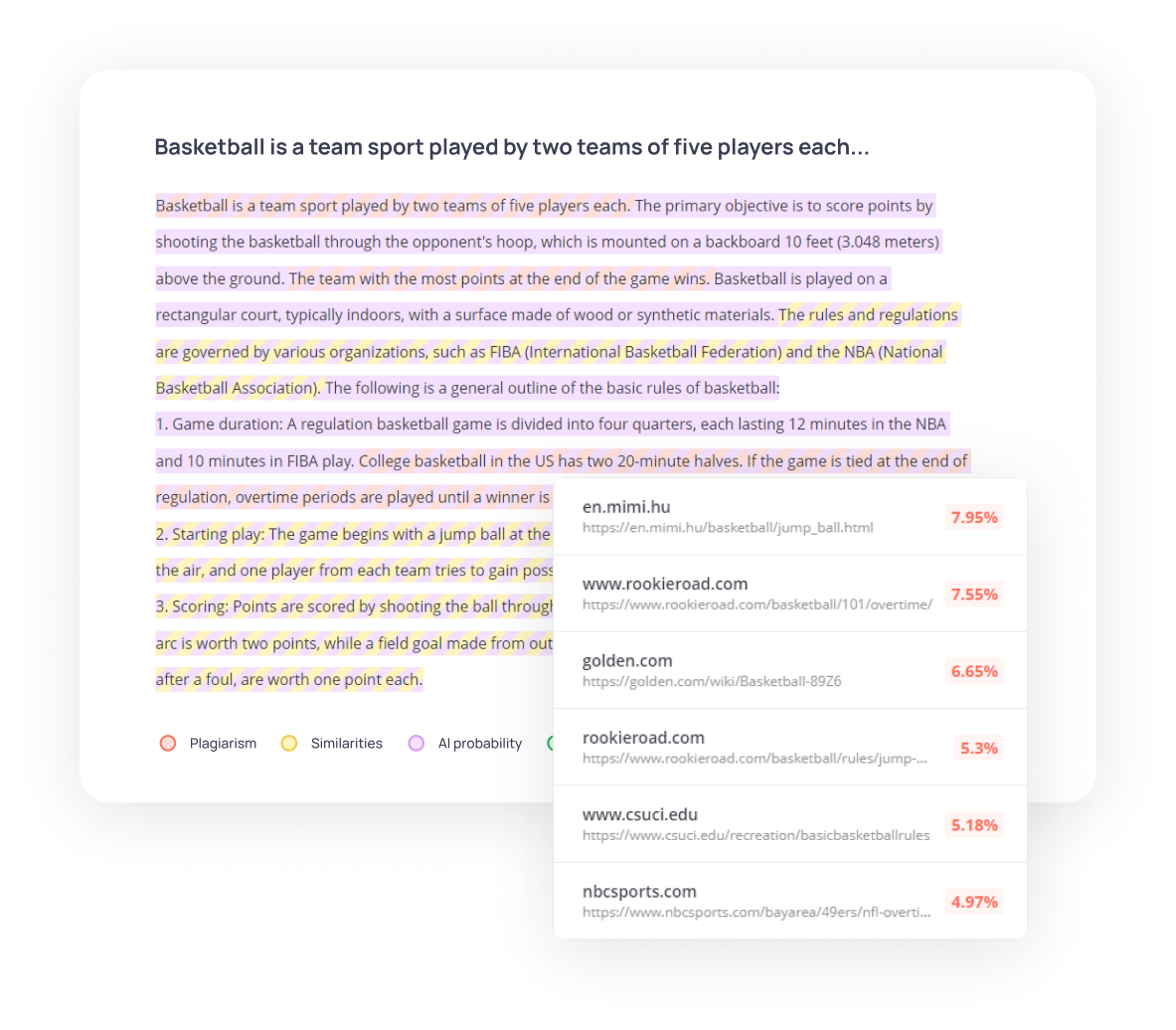
Explore Your
Similarity Report
Review highlighted matches, source links, and similarity details in one report. Editors can evaluate overlap in context and decide whether a manuscript needs revision, clarification, or further review.
Request a Report Demo
Source Highlights
Matched passages are highlighted with source links, helping editors review manuscript overlap faster and with better context.

Editorial Context
Reports help journal teams interpret similarity, discuss revisions, and avoid treating every match as misconduct.
What Users Say About PlagiarismSearch
Got Questions? We’ve Got Answers!
Common questions about checking journal manuscripts and submissions
Can journals check submitted manuscripts?
Yes. Journal editors can use PlagiarismSearch to check submitted manuscripts, research articles, abstracts, reports, and related files before peer review, acceptance, or publication. The report highlights similarity matches and source links so editorial teams can decide whether a submission needs closer review.
Is this for editors or authors?
Both can use it. Journal editors may use PlagiarismSearch to screen submissions during the editorial process, while authors and researchers can check a manuscript before submitting it to a journal. The main goal is to review similarity early and avoid preventable publication issues.
Does a high similarity score always mean plagiarism?
No. A similarity score is a review signal, not a final judgment. Matches may come from references, quotations, standard terminology, methods sections, author names, or properly cited material. Editors should review the highlighted passages and source context before deciding whether overlap is problematic.
Can this help before peer review?
Yes. Many journals prefer to identify possible originality concerns before a manuscript moves too far into peer review or production. A similarity report can help editors decide whether to proceed, request clarification, ask for revision, or investigate a submission more carefully.
Can authors check articles before journal submission?
Yes. Authors and researchers can check manuscripts before journal submission to review source overlap, reused wording, citations, and potentially unclear attribution. This does not guarantee acceptance, but it can help prepare a cleaner manuscript for editorial review.
Is API access available for journal workflows?
Yes. Journals, publishers, and editorial platforms can discuss API access if they need to connect plagiarism checking to a submission system, manuscript workflow, or internal editorial process. This is useful for teams that handle regular or higher-volume submissions.
Can journals request a custom plan?
Yes. If your journal checks submissions regularly, works with multiple editors, or needs API-based access, send an inquiry through the form. We’ll help you choose a suitable setup based on manuscript volume, average length, workflow, and review needs.

Ready to Review Journal Submissions with Confidence?
Tell us about your manuscript-checking workflow and journal needs.
- 1 Plagiarism submission *
- 1 AI submission *
- Unlimited Time frame (days)
- 10 Plagiarism submissions *
- 10 AI submissions *
- Unlimited Time frame (days)
- 50 Plagiarism submissions *
- 50 AI submissions *
- Unlimited Time frame (days)
- 100 Plagiarism submissions *
- 30 Time frame (days)
- 100 Plagiarism submissions *
- 30 Time frame (days)
- 300 Plagiarism submissions *
- API Access
- Access to Storage
- 30 Time frame (days)
- 300 Plagiarism submissions *
- API Access
- Access to Storage
- 30 Time frame (days)
- 300 Plagiarism submissions *
- 300 AI submissions *
- API Access
- Access to Storage
- 30 Time frame (days)
- 300 Plagiarism submissions *
- 300 AI submissions *
- API Access
- Access to Storage
- 30 Time frame (days)
- 100 Plagiarism submissions *
- 100 AI submissions *
- 90 Time frame (days)
- 100 Plagiarism submissions *
- 100 AI submissions *
- 90 Time frame (days)
-
300 Plagiarism submissions *+25on Edulegit
-
300 AI submissions *+25on Edulegit
- API Access
- Access to Storage
- 90 Time frame (days)
-
300 Plagiarism submissions *+25on Edulegit
-
300 AI submissions *+25on Edulegit
- API Access
- Access to Storage
- 90 Time frame (days)
-
500 Plagiarism submissions *+100on Edulegit
-
500 AI submissions *+100on Edulegit
- API Access
- Access to Storage
- 90 Time frame (days)
-
500 Plagiarism submissions *+100on Edulegit
-
500 AI submissions *+100on Edulegit
- API Access
- Access to Storage
- 90 Time frame (days)
- 1 000 Plagiarism submissions *
- 365 Time frame (days)
- 1 000 Plagiarism submissions *
- 365 Time frame (days)
-
3 000 Plagiarism submissions *+25on Edulegit
- API Access
- Access to Storage
- 365 Time frame (days)
-
3 000 Plagiarism submissions *+25on Edulegit
- API Access
- Access to Storage
- 365 Time frame (days)
-
3 000 Plagiarism submissions *+100on Edulegit
-
3 000 AI submissions *+100on Edulegit
- API Access
- Access to Storage
- 365 Time frame (days)
-
3 000 Plagiarism submissions *+100on Edulegit
-
3 000 AI submissions *+100on Edulegit
- API Access
- Access to Storage
- 365 Time frame (days)