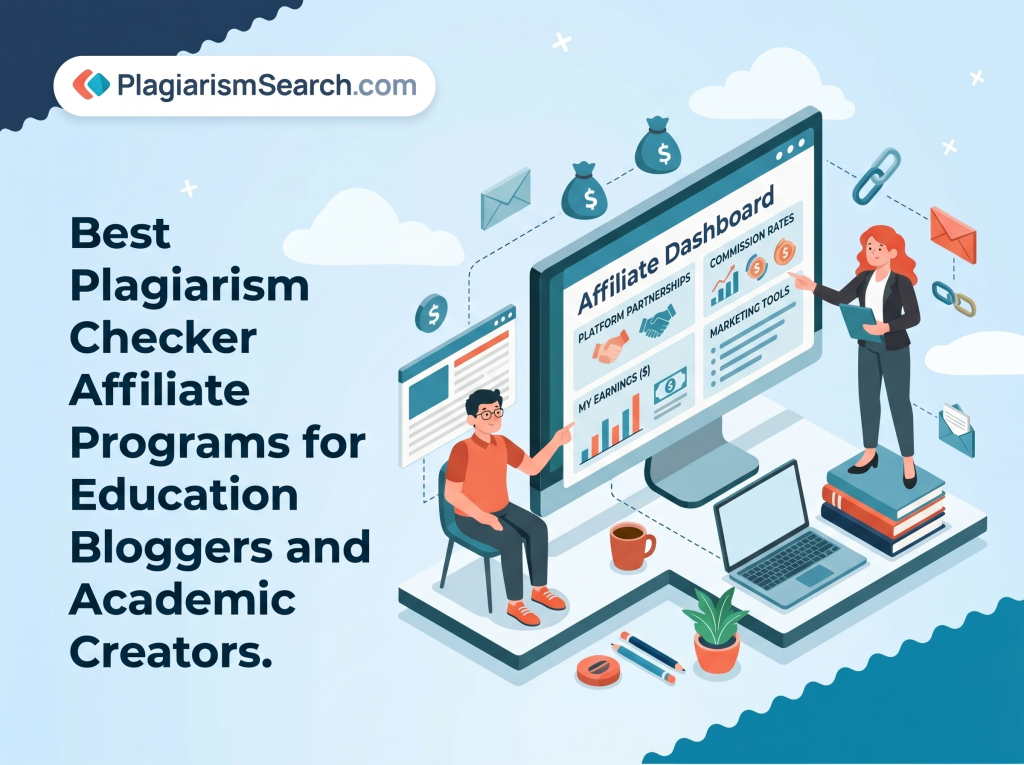
Best Plagiarism Checker Affiliate Programs for Education Bloggers and Academic Creators
Not every affiliate vertical makes sense for every publisher. This one is especially relevant for website owners, bloggers, and content publishers who already attract — or plan to attract — readers interested in education, student support, plagiarism prevention, citations, academic writing, and AI in education. If your content lives anywhere near those topics, promoting the right plagiarism affiliate program can feel far more natural than forcing a generic offer into a highly specific audience journey.
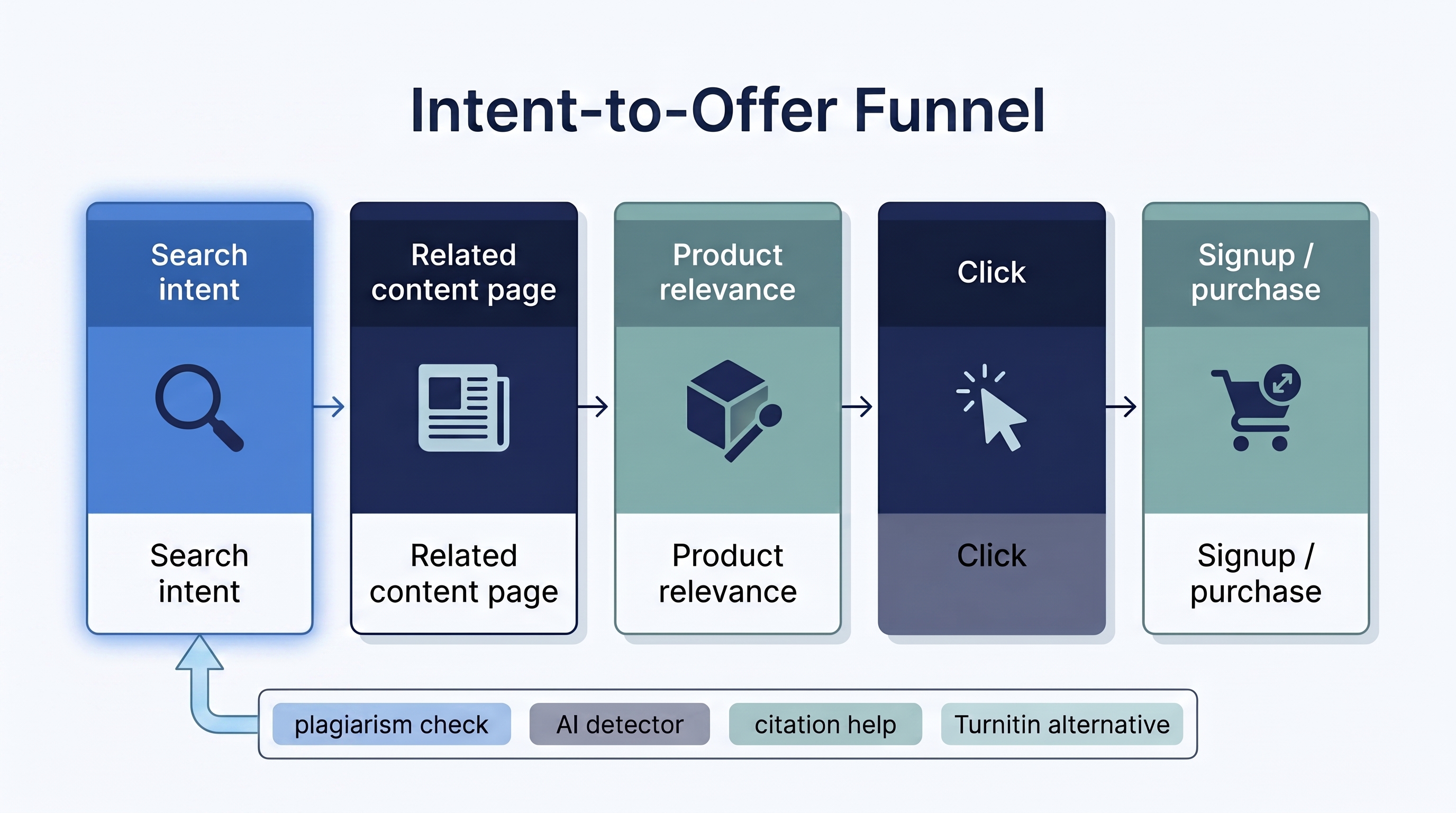
That is why the real question is not which program has the loudest headline commission. It is which offer actually matches the intent behind your traffic. Many site owners compare payout percentages first, but in this niche, fit usually matters more than hype. A page about originality, citation mistakes, AI-generated text, or submission readiness is already close to a meaningful user need. When the offer continues that need instead of interrupting it, trust is easier to maintain and clicks are more likely to turn into real conversions.
This is also one of the main reasons the best plagiarism checker affiliate programs deserve more attention from publishers than they often get. They sit at the intersection of academic pressure, writing quality, originality concerns, and growing uncertainty around AI-generated content. For the right site, that creates a strong commercial path without forcing an unnatural recommendation. A useful tool in the right context tends to outperform a random high-commission offer that has little to do with what the reader came for in the first place.
For publishers with educational or writing-related traffic, relevance often beats raw payout potential. A broad affiliate offer may look attractive on paper, but it can underperform if the product does not match the reader’s immediate problem. By contrast, affiliate programs for education bloggers and academic content publishers can work well when they are tied to content that already speaks to originality, research habits, responsible AI use, or paper preparation. In those cases, the monetization layer feels like a practical extension of the article rather than an added sales element.
Many webmasters still underestimate plagiarism, AI-checking, and writing tools as an affiliate category. That is a mistake, especially for content sites that already publish study resources, classroom guidance, writing tips, or comparison pages around academic tools. This vertical is not ideal for every traffic source, but for a publisher with the right topical alignment, it can become one of the most coherent and scalable monetization options in the broader education content space.
Quick Answer: What Makes These Affiliate Programs Worth Promoting
If you only remember one thing from this guide, make it this: a strong plagiarism checker affiliate program is not simply the one with the highest payout on paper. For most webmasters, the better choice is the offer that fits the audience, matches the page intent, and feels credible enough to recommend without weakening the site’s voice.
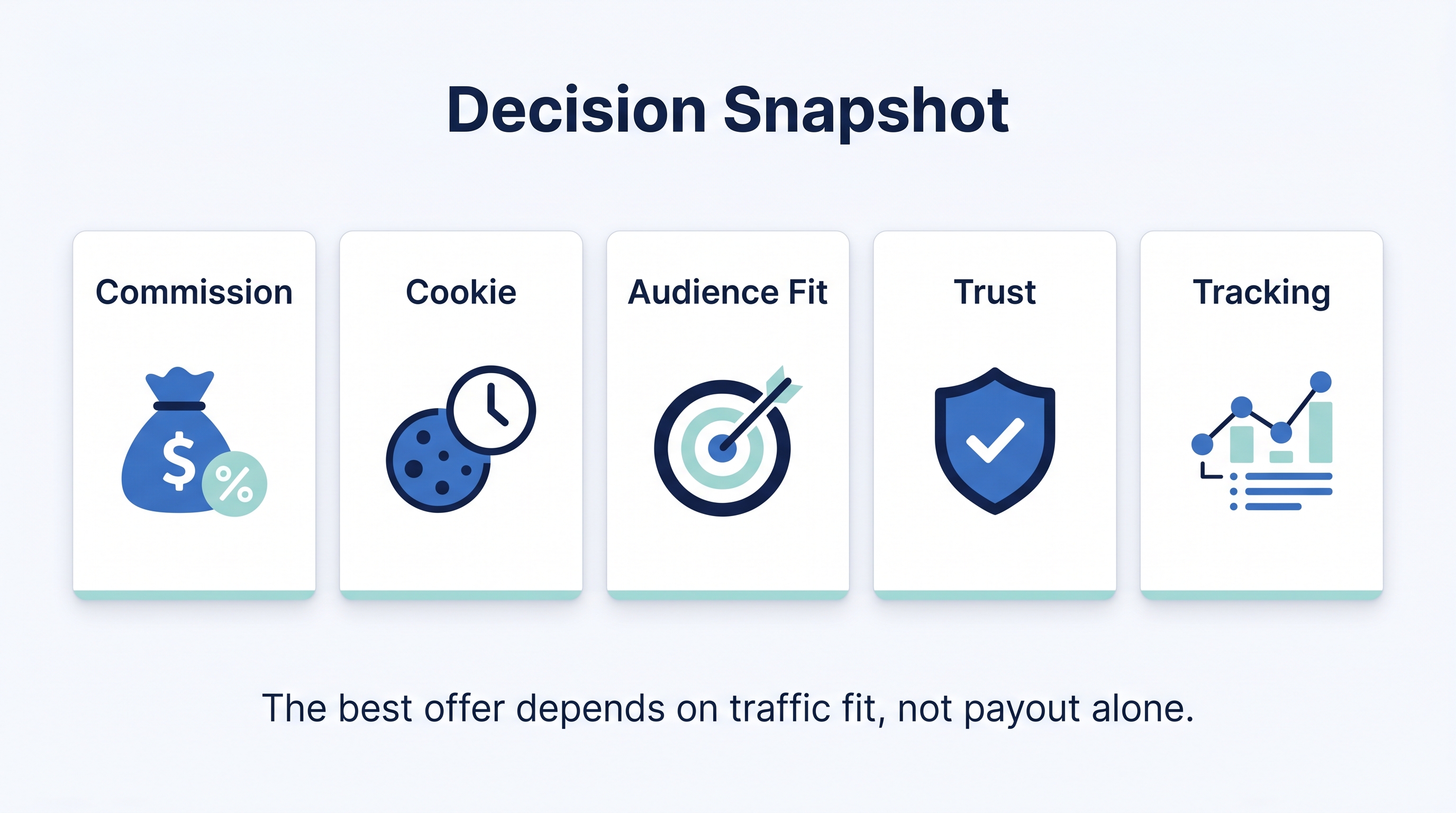
- Audience fit matters first. If the product solves a problem your readers already have, clicks and conversions become much easier to earn.
- Cookie window can matter more than people expect. In education and writing-related journeys, users often compare, leave, return, and decide later.
- Commission model changes the real value of the offer. A lower rate with ongoing earnings can outperform a higher one-time payout.
- Trust affects monetization. If a tool feels difficult to recommend honestly, even a generous commission structure can underperform.
- Tracking is part of the offer. Webmasters need to see what is working, not just hope that traffic turns into revenue.
It also helps to separate the market into distinct categories instead of treating every program as interchangeable. Some offers are focused only on plagiarism detection. Others combine AI detection with plagiarism checking. Some belong to a broader writing-tool category and make more sense on productivity or editing content than on integrity-focused pages. That difference matters because the best-performing offer is usually the one that slides naturally into content you already publish.
In practical terms, the most promotable programs are not always the loudest ones. They are the ones that make sense on your existing pages, match the expectations of your readers, and create as little friction as possible between the article and the recommendation.
Why Education, Academic Writing, and Integrity Traffic Can Monetize Well
Some traffic looks large but converts weakly. Other traffic is smaller, yet much closer to action. In this niche, that difference matters a lot. A visitor reading about plagiarism, originality, citations, or AI-generated text is often not browsing casually. They are already trying to solve a specific problem, which makes the path from content to offer far shorter than it is on broad educational pages.
Search intent matters more than broad traffic volume
People searching for terms like plagiarism checker, originality check, AI detector, Turnitin alternatives, or citation help usually arrive with a practical goal in mind. They want to verify something, improve something, compare tools, or avoid a mistake before submitting work. That is very different from general student lifestyle traffic, where curiosity may be high but immediate buying intent is much weaker.
For webmasters, this is an important distinction. A smaller page that attracts readers with a clear problem-to-solution mindset can often produce better affiliate outcomes than a much larger article aimed at a broad student audience. Intent-heavy traffic tends to respond better because the recommended tool feels like a direct next step instead of an unrelated add-on.
Why thematic relevance beats random high-commission offers
On an education or writing-focused site, a thematically aligned offer will usually outperform a random high-payout product. Readers are much more likely to click when the recommendation naturally extends the article they are already reading. If a page discusses originality before submission, citation problems, or academic honesty, then suggesting a relevant checking tool feels useful rather than intrusive.
That continuity affects both trust and click-through rate. When the offer matches the topic, the site keeps its editorial credibility, and the call to action feels earned. By contrast, even a generous commission can underperform when the product does not belong in the conversation the article is having with the reader.
Where plagiarism and AI-related offers fit naturally
These offers tend to work best on content that already sits close to originality, writing quality, or submission readiness. Good examples include pages focused on:
- avoiding plagiarism in essays, research papers, or coursework,
- checking originality before submission,
- AI-generated text concerns in education,
- essay and paper preparation workflows,
- citation style confusion and referencing mistakes,
- classroom integrity, academic honesty, and responsible tool use.
When a webmaster already publishes in those areas, the monetization path becomes more natural. The offer is not being forced into the page; it is completing the reader’s journey. That is why this vertical can be especially strong for sites with focused educational or academic-writing traffic, even when their overall audience is not massive.
Who Should Promote These Programs — and Who Probably Shouldn’t
One of the easiest ways to waste time with affiliate monetization is to promote the right kind of offer to the wrong kind of audience. Plagiarism, AI-detection, and academic writing tools can perform very well, but only when there is a clear connection between the publisher, the topic, and the reader’s problem. Before looking at commission structures or cookie lengths, it helps to ask a more basic question: does this offer genuinely belong on your site?
Best-fit publishers
This niche tends to work best for publishers whose content already intersects with learning, writing, originality, or responsible tool use. Strong-fit publishers often include:
- education bloggers who publish study advice, academic skills content, or student success resources,
- student resource websites that help with coursework, submissions, research habits, or paper preparation,
- academic writing blogs covering structure, originality, revision, citations, and submission readiness,
- plagiarism and citation guides that already attract users comparing tools or looking for practical solutions,
- AI in education publishers discussing AI-generated text, classroom policies, detection concerns, or ethical use,
- tutors and writing coaches who regularly recommend workflows, checks, and support tools,
- educational newsletters and YouTube channels that help learners or educators make better decisions.
What all of these publishers have in common is context. Their audiences already care about writing quality, originality, academic integrity, or submission confidence. That makes the offer feel like a continuation of the content, not a sharp turn away from it.
Weak-fit publishers
On the other hand, some traffic sources are usually a poor match for this category. That does not mean they can never generate clicks, but the fit is often too weak to build strong, consistent conversions.
- Entertainment traffic may be large, but it rarely arrives with a need for originality checks or academic tools.
- General lifestyle sites often lack the topical trust needed to recommend writing or integrity-related products convincingly.
- Mass, untargeted coupon pages may attract bargain-seeking visitors without the underlying problem these tools are designed to solve.
- Content with no real connection to study habits, writing workflows, originality concerns, or AI tools usually struggles to make the offer feel relevant.
In those environments, even a strong program can underperform because the recommendation feels disconnected from the reason the reader came to the page in the first place.
A simple rule for deciding whether your traffic is relevant
If you are unsure whether this niche fits your site, use a simple three-part test before you go any further.
- Does your audience already have a pain point this product solves? If your readers worry about plagiarism, citations, AI-generated content, paper quality, or submission readiness, that is a strong signal.
- Would the recommendation feel natural inside your existing content? If the answer is yes, your CTR and trust potential are usually much higher.
- Can you recommend the tool without weakening your credibility? If the suggestion feels honest and useful rather than forced, the fit is probably real.
When the answer is yes to all three, the traffic is usually relevant enough to test this vertical seriously. When the answer is no to one or more, the smarter move may be to improve topical alignment first instead of rushing into promotion.
How We Evaluated the Programs in This Guide
This guide is not built around headline percentages alone. The programs discussed here were reviewed using publicly available affiliate terms, product positioning, and practical considerations that matter to publishers working with educational, academic, and writing-related traffic. In other words, the goal is not simply to compare offers in the abstract, but to understand how useful they are for the kind of webmaster who wants monetization to feel relevant, credible, and sustainable.
That distinction matters. A program can look attractive at first glance because the commission sounds generous, yet still be a weak fit for a site whose traffic comes from student resources, citation help, plagiarism guidance, or AI-in-education content. That is why this comparison focuses on real promotional suitability, not just headline payout language.
To keep the evaluation practical, the programs in this guide are assessed through the following lens:
- Commission structure: how the payout model is built and whether it looks attractive beyond the first click.
- Recurring vs. one-time logic: whether the offer creates ongoing earning potential or depends on a single transaction.
- Cookie duration: how long the program can still credit delayed decisions and returning visitors.
- Payout threshold: how realistic it is for a small or mid-sized publisher to reach a payout.
- Payout cadence: how often commissions are actually paid and how that affects practical value.
- Dashboard and tracking: whether affiliates can clearly see clicks, conversions, and performance trends.
- Product trust: how easy the tool is to recommend without weakening site credibility.
- Audience fit: how naturally the product aligns with educational, writing, originality, or AI-related traffic.
- Promotional practicality: how easy it is to integrate the offer into existing pages, comparisons, guides, newsletters, or creator workflows.
By framing the guide this way, the comparison becomes more useful for real-world decision-making. Instead of asking only which offer pays more, the better question becomes which program is most likely to work well on a site with this specific type of traffic. That is the standard used throughout the rest of the article.
The Decision Factors That Matter Most for Webmasters
This is where many affiliate comparisons become too shallow to be useful. A webmaster does not just need to know which program sounds generous at first glance. They need to understand which offer is most likely to perform well with their audience, their content format, and their traffic patterns over time.
In practice, the strongest affiliate choice is usually the one that balances monetization potential with fit, visibility, and ease of promotion. A program can look attractive in a headline and still become frustrating to work with once real traffic starts moving through it.
| Program | Commission | Cookie | Best Fit | Best Use |
|---|---|---|---|---|
| Copyleaks | 15% lifetime recurring | 30 days | AI + originality content | AI-detection and authenticity pages |
| Quetext | 40% + renewals | 60 days | Educators and creators | Writing-help and originality content |
| Paperpal | 30% one-time | 60 days | Students and researchers | Academic writing improvement pages |
| PlagiarismSearch | 30% first + 20% lifetime | 90 days | Education-focused publishers | Plagiarism, citation, and Turnitin-alternative content |
Quick note: Use the table for fast comparison, then explain dashboard access, payout threshold, and tracking in the text below the table instead of forcing everything into extra columns.
Commission model: one-time, recurring, and hybrid offers
A one-time payout can look impressive when compared side by side with other offers, but it is not always the most valuable model in the long run. If the program only rewards the first transaction, the webmaster’s upside may end too early, especially when the audience includes users who return, upgrade, or keep using the product over time.
Recurring logic becomes much more attractive in niches where trust builds gradually and readers may stay connected to the tool beyond the first purchase. That is often the case with educational, writing, and integrity-related products. When a program continues rewarding the affiliate after the first conversion, it can create a more stable revenue pattern from content that keeps attracting relevant traffic.
Hybrid structures often feel the most balanced because they combine a strong initial payout with longer-term earning potential. For many webmasters, that mix is easier to work with than choosing between a flashy first-sale commission and a lower but slower recurring model. The real question is not which structure sounds best in theory, but which one makes the most sense for how your audience actually behaves.
Cookie duration and delayed conversions
In student, educator, and writing-focused segments, users do not always convert on the first visit. They may compare several tools, revisit the article later, ask for advice, or simply postpone the decision until they are closer to submission. That makes cookie duration far more important than many beginners assume.
A longer cookie gives your content more room to work. It protects value that would otherwise be lost when the reader needs extra time before committing. On the publisher side, that means content with strong intent can keep generating credit even when the buying cycle is not immediate.
In simple terms: if your audience tends to research before choosing, a longer cookie is not a bonus feature — it is part of the core value of the offer.
Payout threshold and payout timing
For a mid-sized webmaster, practical value matters as much as theoretical value. A program may promise attractive commissions, but if the payout threshold is too high or the payment schedule is unclear, it becomes harder to treat the offer as a dependable monetization channel.
- A lower payout threshold makes it easier to reach real earnings earlier.
- A clear payout cadence helps publishers plan and measure whether the offer is worth scaling.
- Transparent terms reduce uncertainty and make testing less risky.
That is why experienced webmasters often look beyond the headline commission. They want to know how quickly the program becomes tangible, not just how good it looks in an affiliate banner or onboarding email.
Audience fit and product trust
Even a well-paying program can fail when the product does not belong naturally in the content. Audience fit asks a simple question: does this tool solve a problem your readers already have? If the answer is unclear, the affiliate link will usually feel forced, no matter how polished the landing page is.
Trust matters just as much. Some tools are easy to recommend because they align with the expectations of students, educators, researchers, or academic writers. Others may create friction if the brand feels vague, the use case is hard to explain, or the recommendation sounds more commercial than helpful. In this niche, credibility is not optional. If you would hesitate to mention the tool openly in your article, your readers will likely hesitate too.
Dashboard, tracking, and affiliate visibility
A good affiliate program should not only pay; it should also show you what is happening. Visibility into clicks, conversions, performance trends, and traffic outcomes gives the publisher something far more useful than optimism: evidence.
Dashboard access and tracking quality matter for three reasons. They build trust in the program itself, they make optimization possible, and they help the webmaster decide where to place future effort. Without clear reporting, it becomes much harder to know whether a weak result comes from the offer, the page, the audience, or the call to action.
In other words, tracking is not a technical extra. It is part of the program’s usability.
Promotional practicality
The last major factor is how easy the offer is to work into real content. Some affiliate programs look acceptable on paper but become awkward in practice. Their positioning is too broad, the message is hard to explain, or the offer only fits a narrow kind of promotional page.
A practical program should be flexible enough to appear naturally across several formats, including comparison articles, educational blog posts, email recommendations, resource pages, and tool roundups. The easier it is to integrate the offer without changing your editorial tone, the easier it becomes to scale monetization without damaging the user experience.
For that reason, the best affiliate offer is rarely defined by one metric alone. It is the one that combines monetization strength with fit, transparency, and real-world usability for the kind of site you already run.
The Main Types of Affiliate Offers in This Space
Before choosing a specific brand, it helps to understand that not every offer in this niche solves the same problem. Some programs are tightly focused on plagiarism detection. Others combine plagiarism checking with AI-related use cases. Some belong more to the academic writing and editing category, while broader writing tools may only partially overlap with educational intent. For a webmaster, that distinction matters because the right type of offer usually matters more than the right brand name.
If you start by matching the category to your traffic, the later decision becomes much easier. Instead of asking which program looks best in isolation, you can ask which type of product actually belongs on your site.
Plagiarism-only programs
Plagiarism-only programs tend to be the most direct fit for publishers whose content already focuses on originality, citations, academic honesty, and pre-submission checks. They work especially well on plagiarism guides, comparison pages, citation resources, and articles aimed at students or educators who want to verify work before it is submitted.
Their biggest strength is clarity. The use case is easy to explain, the product-to-problem connection is strong, and the call to action often feels highly relevant. If a reader has landed on a page about plagiarism risks or originality checking, a plagiarism-focused tool is a natural recommendation rather than a conceptual jump.
The weakness of this category is that it can be narrower than other options. A plagiarism-only offer may be excellent on integrity-related pages but less flexible on broader productivity, writing-improvement, or AI-content discussions. For publishers with a tightly themed site, that is often a strength. For publishers with broader editorial coverage, it can be a limitation.
AI + plagiarism programs
AI + plagiarism programs are especially strong for publishers attracting traffic around AI tools, AI-generated text concerns, classroom AI policies, and questions about whether a piece of writing is both original and human-written. These offers fit the current educational climate well because they respond to two overlapping worries at once: originality and AI involvement.
That dual positioning can make them more adaptable than plagiarism-only tools on sites that publish about both academic integrity and emerging classroom technology. They often make sense on pages about responsible AI use, assignment policies, AI detector comparisons, and discussions around student writing in the age of generative tools.
In some cases, this category can outperform broader writing offers because the reader’s problem is sharper and more urgent. Someone worried about AI-generated text or originality issues is often closer to taking action than someone simply looking for general writing help.
Academic writing and editing tools
Academic writing and editing tools are not always positioned directly around plagiarism, but they can still perform well on researcher- and student-oriented content. These offers tend to fit pages about drafting, revision, clarity, structure, submission readiness, and academic writing improvement.
Their advantage is breadth within the academic workflow. They can appeal to readers who are not specifically looking for a plagiarism check but are actively trying to improve a paper, refine language, or prepare for submission. On researcher-facing or student-writing content, that can make them a useful complementary offer.
The trade-off is that the purchase intent may sometimes be softer. A user looking for editing support is not always as close to a concrete tool decision as someone searching for a plagiarism checker or AI detector. That does not make these programs weak — it just means they often work best in a slightly different content environment.
Broader writing tools with partial educational fit
Broader writing tools can make sense when your site covers productivity, content creation, general writing improvement, or mixed audiences that include students alongside professionals and creators. In those cases, a wider writing product may feel flexible enough to appear across many article types.
However, that flexibility can also become a weakness. On highly targeted pages about plagiarism, originality, or academic integrity, a broad writing tool may feel too general. It may still be useful, but it does not always match the intensity or specificity of the reader’s intent. When the content is strongly focused on detection, submission risk, or citation accuracy, a narrower and more thematic offer usually feels more convincing.
The practical takeaway: choose the type of offer first, then compare the brands inside that category. That approach leads to better alignment, clearer recommendations, and stronger long-term monetization than jumping straight into brand comparisons without thinking about fit.
Selected Programs Worth Considering
This is not a ranked list, because the right choice depends too much on the type of site, the audience, and the intent behind the traffic. A program that looks ideal for an AI-in-education publisher may not be the strongest fit for a plagiarism-focused comparison page, and a strong offer for academic writing content may not be the best choice for broader creator traffic. The more useful approach is a soft comparison: what each program is strong for, who it fits best, and where it may be less ideal.
Copyleaks
What it is strong for: Copyleaks stands out most when a publisher wants to cover both plagiarism and AI-related concerns under one offer. Its positioning is practical for content that sits at the intersection of originality, AI-generated text, and academic integrity. That makes it especially relevant for publishers building pages around AI detection, classroom AI concerns, and broader trust-in-writing topics rather than plagiarism alone.
Who it fits best: It is a strong fit for sites with traffic around AI tools, responsible AI use, integrity policies, and content authenticity. Publishers whose readers are worried about whether text is original, human-written, or policy-compliant may find this type of offer easier to position than a narrower plagiarism-only tool.
Where it may be less ideal: For very focused educational publishers whose content is mostly about student submissions, citation mistakes, or traditional plagiarism prevention, Copyleaks can sometimes feel broader than necessary. Its wider AI angle is a strength, but not every academic audience needs that level of overlap.
Quetext
What it is strong for: Quetext has a creator-friendly angle that makes it easier to position across several content formats. It sits comfortably between academic integrity, writing support, and originality-focused content, which gives it more flexibility than a narrowly framed offer. For publishers who create comparisons, educational blog posts, or writing-advice content, that balance can be valuable.
Who it fits best: It is well suited to bloggers, educators, writers, and content creators who want an offer that feels accessible without losing relevance. It can work well on plagiarism-related articles, but it also has enough breadth to appear naturally on writing-help or content-quality pages.
Where it may be less ideal: If a site is built around highly technical AI-detection content or extremely narrow academic workflows, Quetext may not always feel as specialized as a more sharply positioned alternative. Its strength is balance and usability, which means some publishers may see it as less niche-specific than they want.
Paperpal
What it is strong for: Paperpal is most compelling where the audience is already close to academic writing improvement, revision, and research-oriented workflows. It makes the most sense for content that speaks to students, researchers, graduate writers, and people trying to improve a paper before submission. In that environment, the offer feels like part of the writing process rather than a separate detection layer.
Who it fits best: It is a better fit for researcher- and student-oriented traffic than for pure plagiarism-intent traffic. Publishers covering manuscript improvement, academic English, editing, clarity, and pre-submission refinement may find it especially natural.
Where it may be less ideal: Paperpal is not the strongest match for pages where the user intent is specifically to check plagiarism or compare originality tools. Its value is clearer on writing-improvement and research-support content than on direct plagiarism-checker searches.
PlagiarismSearch
What it is strong for: PlagiarismSearch is a particularly strong fit for education-focused publishers who want an offer that stays close to academic integrity and originality while still being practical from an affiliate perspective. The combination of a long cookie window, ongoing value beyond the first purchase, and clear tracking/support features makes it attractive for content-led monetization.
Who it fits best: It fits especially well on sites publishing about plagiarism prevention, originality before submission, Turnitin alternatives, academic honesty, AI in education, and writing-readiness topics. For publishers with a focused educational audience, the offer is easy to explain and naturally aligned with user needs.
Where it may be less ideal: It may be less compelling for broad productivity publishers or general writing sites that want one very wide offer for many unrelated topics. Its real strength appears when the traffic already has a close connection to plagiarism, originality, and academic-quality concerns.
The practical takeaway: these programs are worth considering for different reasons. The right choice depends less on finding a universal winner and more on matching the offer to the kind of reader, page intent, and editorial context your site already has.
Why PlagiarismSearch Deserves Special Attention for Education-Focused Publishers
Among the programs in this guide, PlagiarismSearch deserves a closer look from publishers whose traffic is already tied to academic integrity, originality, citation help, and student writing workflows. Its appeal is not based on one isolated feature. What makes it stand out is the way its commission model, cookie length, tracking visibility, and topical relevance work together for content-led promotion.
Why the commission structure is attractive for this niche
For publishers who build trust over time, a one-off commission is not always enough. Educational and writing-related traffic often returns to the same topics repeatedly: students revisit guidance before submission, educators compare tools over time, and readers often move from awareness content to action later in the funnel. In that context, a structure that combines 30% on the first purchase and 20% lifetime commission is more than a headline number. It creates a stronger long-term monetization profile for traffic that may not convert only once.
This is especially useful for publishers whose audiences are not purely transactional. When the site earns repeat attention and the product can remain relevant beyond the initial click, the value of the offer becomes more durable. That makes the model feel better suited to educational trust-based content than a simple one-time payout with no ongoing upside.
Why the 90-day cookie matters
People in this niche do not always make decisions immediately. A student may find a guide, leave, compare alternatives, and come back later. A teacher or content publisher may read an article now and only test the tool when a practical need becomes urgent. That is why a 90-day cookie is not a minor detail. It gives content more time to do its job.
For content-led acquisition, that matters a lot. When the recommendation sits inside blog posts, comparison pages, educational resources, or writing guides, readers often move more slowly than they would on a pure transactional landing page. A longer cookie helps protect that delayed decision-making process instead of cutting off the affiliate’s credit too early.
Why visibility and support matter to affiliates
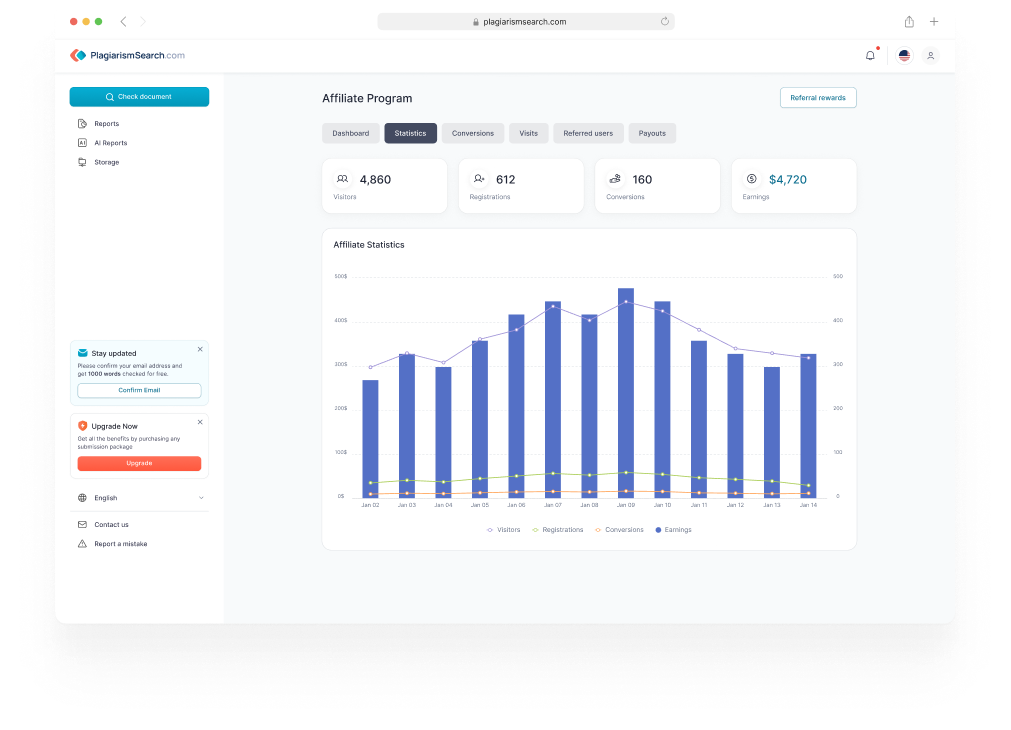
Good affiliate programs do not just promise earnings; they show what is happening behind the scenes. PlagiarismSearch strengthens its offer with practical affiliate infrastructure, including a dashboard, performance statistics, conversion tracking, and support. For publishers who want to test pages, compare placements, and understand where revenue is coming from, that visibility is a major advantage.
It also improves trust. When affiliates can see data instead of guessing, they are far more likely to treat the program as something worth optimizing rather than a passive link tucked away inside old content. In that sense, dashboard access and reporting are not just convenience features. They are part of what makes the partnership usable.
Why the offer is easy to position on educational and writing content
One of the biggest strengths of PlagiarismSearch is how naturally it fits into pages about plagiarism, originality before submission, student writing, citation issues, academic honesty, and AI-detection-related concerns. The offer does not need to be forced into those topics because it already belongs in the same conversation. That lowers friction for both the publisher and the reader.
Compared with a broad affiliate offer that only partially overlaps with the page, this kind of alignment is easier to monetize without damaging editorial trust. A recommendation feels more believable when it solves the exact problem the article has been discussing from the start. For education-focused publishers, that is often the difference between an affiliate link that gets ignored and one that becomes a logical next step.
If your site already attracts readers looking for help with originality, responsible AI use, academic writing confidence, or submission readiness, the PlagiarismSearch affiliate program is worth serious consideration as a direct next-step offer.
Where These Offers Monetize Best on an Existing Site
The strongest affiliate program can still underperform when it is placed on the wrong type of page. That is why placement matters almost as much as program choice. On an existing site, the goal is not simply to add more links. It is to match the offer to the page type, the reader’s intent, and the level of decision-readiness already present in the content.
Some pages are naturally closer to conversion because the user is already comparing tools, evaluating solutions, or looking for a next step. Others work better with softer, contextual recommendations because the reader is still learning and may not be ready to act immediately. Understanding that difference helps webmasters place affiliate offers where they make editorial and commercial sense at the same time.
Comparison articles and “best tool” pages
Comparison pages and “best tool” roundups are often among the highest-converting assets in this niche because the reader already expects product discussion. The intent is not purely informational anymore. It is usually investigative, and that means the user is much closer to choosing a solution.
That is why affiliate intent works so well here. The page gives the reader a framework for evaluation, reduces uncertainty, and creates a natural place for a recommendation or click-through. On these pages, comparison-style CTAs tend to work better than soft mentions because the reader is already in decision mode.
Turnitin alternative content
Turnitin alternative pages are one of the clearest bridges into plagiarism-related affiliate offers. A user arriving on this type of content is rarely exploring the topic casually. In most cases, they already know the problem they are trying to solve and are actively comparing solutions.
That makes this format especially valuable for publishers. The search intent is already comparative, which means the reader is more prepared for side-by-side positioning, tool differentiation, and direct next-step recommendations. On pages like this, a comparison CTA often feels more natural than a general contextual mention because the entire article is already built around alternatives and choice.
Plagiarism, originality, and citation guides
How-to content can also monetize well, but the mechanics are different. On these pages, the reader may still be in learning mode rather than immediate buying mode. They want to understand what plagiarism is, how originality checks work, how to avoid citation mistakes, or what to review before submission.
That is why softer integration usually works better here. A contextual recommendation placed at the point where the user naturally needs a tool tends to outperform an aggressive sales-style CTA. In other words, these pages work best when the affiliate offer feels like help, not a detour.
AI detection and AI-in-education content
For sites that already attract traffic around AI concerns, this is one of the strongest adjacent monetization paths. Readers interested in AI-generated text, classroom policy, responsible AI use, or AI detection often overlap with audiences that care about originality and academic integrity. That overlap creates a meaningful bridge to plagiarism-related and AI-plus-plagiarism offers.
These pages are especially useful when the site already has authority in the broader AI-in-education conversation. In that case, the affiliate recommendation can be positioned as part of a wider toolkit for evaluating writing, protecting academic standards, or checking text before submission. The conversion path may not always be as immediate as on a comparison page, but the relevance is often strong enough to produce high-quality clicks.
Student writing help and pre-submission checklists
This format works well because it is low-friction and practical. Readers searching for pre-submission advice are already thinking in checklists, final reviews, and last-step improvements. That mindset creates a natural opening for a recommendation tied to originality, AI concerns, citations, or writing confidence.
These pages may not always produce the highest-intent clicks individually, but they can be excellent support assets within a larger content cluster. They are especially effective when the recommendation appears as one step in a broader preparation process rather than the sole focus of the page.
Practical rule of thumb: use stronger comparison CTAs on high-intent pages where the reader is already choosing between tools, and use softer contextual recommendations on educational pages where the reader is still learning. The better your call to action matches the search intent behind the page, the more naturally the monetization layer will perform.
Common Mistakes Webmasters Make in This Niche
Affiliate monetization in the education and writing space usually fails for predictable reasons. In many cases, the problem is not the niche itself or even the program being promoted. The problem is that the offer is placed with the wrong logic, on the wrong page type, or in front of the wrong audience. That is why it helps to look at the most common mistakes not as abstract warnings, but as practical issues that directly affect clicks, trust, and revenue.
Choosing based on commission rate alone
This is one of the most common mistakes because it feels rational at first. A higher percentage looks better on paper, so many webmasters assume it must be the better offer. The problem is that commission rate by itself says very little about how well the program will perform on a real site.
An offer with a high payout can still underperform if the product feels out of place, converts weakly, or fails to match the reader’s intent. In practice, that often leads to disappointing click-through rates, weak conversions, and the false conclusion that the niche does not work. The better approach is to weigh commission alongside audience fit, cookie length, trust, and ease of promotion.
Ignoring content-to-offer fit
Another major mistake is trying to monetize pages with an offer that does not naturally belong there. When the content and the product solve different problems, the recommendation feels forced. Readers notice that quickly, and once that trust slips, even relevant offers elsewhere on the site can become harder to promote.
The result is usually low engagement, weaker credibility, and affiliate placements that feel like interruptions instead of useful next steps. The way to avoid this is simple: make sure the offer continues the reader’s journey. If the page is about originality, citation errors, AI-generated text, or submission readiness, the recommendation should feel like a logical extension of that topic.
Promoting too early on low-intent pages
Not every educational page is ready to convert. Some users arrive because they are trying to understand a concept, not choose a tool. When a webmaster pushes an affiliate CTA too early on those pages, the result is often poor performance and a user experience that feels too commercial for the stage of the journey.
This usually leads to weak clicks and lower trust, especially when the page has not yet earned the right to recommend a solution. A better strategy is to use softer contextual recommendations on low-intent pages and reserve stronger comparison-style calls to action for content where the reader is already closer to evaluating options.
Treating every educational audience the same
Educational traffic is not one audience. A student looking for help before submission, a teacher exploring classroom policy, a researcher refining a manuscript, and a blogger comparing tools are all arriving with different goals. When webmasters treat them as interchangeable, they often end up using the wrong tone, the wrong offer, or the wrong type of CTA.
The consequence is not always dramatic, but it adds friction everywhere. Messaging becomes less precise, recommendations feel less relevant, and monetization becomes harder to scale. The fix is to think in segments. Ask who the page is really serving and what decision that person is most likely to make next.
Forgetting about cookie length and tracking quality
Some publishers focus so heavily on the visible commission that they overlook the mechanics that make the program usable over time. In this niche, delayed decisions are common. If the cookie is too short, valuable clicks may never turn into credited conversions. If tracking is weak, the webmaster may never know whether the problem is the offer, the page, or the audience.
That creates two kinds of loss at once: lost revenue and lost insight. To avoid it, evaluate affiliate terms like an operator, not just a promoter. Look at how long the program gives your content to convert, and whether the dashboard provides enough visibility to improve placement, messaging, and page selection over time.
The practical takeaway: most failures in this niche do not come from choosing a “bad” category. They come from mismatching the offer to the page, the audience, or the intent. Webmasters who avoid these mistakes usually build stronger trust, cleaner monetization paths, and far more reliable long-term results.
Frequently Asked Questions
Which plagiarism checker affiliate program is best for education blogs?
The best option is usually the one that fits your content and audience most naturally. For education blogs, that often means choosing a program that aligns with plagiarism prevention, originality checks, academic writing, citations, or AI-in-education topics rather than chasing the highest payout alone.
Is recurring commission always better than a higher one-time payout?
Not always. Recurring commission can be more valuable when the product stays relevant beyond the first purchase, but a strong one-time payout may still work well on high-intent comparison pages. The better model depends on how your audience behaves and how the offer fits your content.
Can AI-related traffic convert into plagiarism tool sales?
Yes, especially when the traffic is already focused on AI-generated text, classroom AI concerns, originality, or academic integrity. In those cases, the connection between the content and the offer is strong enough to produce qualified clicks.
What kind of pages tend to monetize best with these offers?
Comparison pages, “best tool” roundups, Turnitin alternative articles, plagiarism guides, citation help content, AI detection pages, and pre-submission checklists tend to perform well. The strongest pages usually combine clear intent with a natural place for a recommendation.
Is cookie duration more important than payout size?
Sometimes it is. In this niche, users often compare tools and return later, so a longer cookie can protect value that would otherwise be lost. A high payout looks attractive, but if the cookie is too short, the real earning potential may be lower than it seems.
Should I compare multiple tools before promoting one?
In many cases, yes. Comparison content often performs well because it matches how users actually make decisions. Even if you later emphasize one program more strongly, showing alternatives first can build trust and make your recommendation more credible.
Can a smaller niche site do well with these programs?
Yes. A smaller site with tightly matched traffic can outperform a larger site with weak relevance. In this vertical, focused intent often matters more than broad volume.
What makes PlagiarismSearch a strong fit for academic traffic?
Its main advantages are clear topical fit, a 90-day cookie, a commission structure that includes ongoing value, and affiliate tools such as dashboard access, tracking, and support. For publishers working with plagiarism, originality, citation, student-writing, and AI-in-education content, that combination is especially practical.
Final Thoughts
Not every type of traffic is a strong match for this vertical. If your site is broad, untargeted, or disconnected from writing, originality, academic integrity, or AI-related concerns, even a good affiliate program may struggle to convert. In that case, the problem is usually not the offer itself but the gap between the content and the user’s real intent.
But for publishers working in educational, writing, citation, plagiarism, originality, and AI-in-education topics, this is one of the most logical affiliate directions to explore. The fit is clear, the reader need is often immediate, and the right recommendation can feel like a useful continuation of the page rather than a sales interruption.
The strongest program is rarely the one with the loudest headline. It is the one that best matches your content, your audience, and the way your readers move from problem to solution. For publishers with focused academic or education-related traffic, PlagiarismSearch stands out as a particularly strong option because it combines topical relevance with a long cookie window, ongoing commission value, and practical affiliate support.
View the PlagiarismSearch affiliate program details and see whether it fits your site.