Plagiarism Checker for Publishers
Review manuscripts, journal articles, book chapters, and editorial content before publication. PlagiarismSearch helps publishers identify text similarities and source matches with clear, confidential reports.


 476K+
476K+
Check Content
Before Publication
Author submissions, edited chapters, journal articles, and educational materials can contain reused or insufficiently attributed text. PlagiarismSearch helps editorial teams review similarity before release, reduce avoidable publishing risks, and make better decisions with source-based reports.
Request a Publisher Demo
For Editorial Teams
Built for publishers, editors, and content teams reviewing original work.

Confidential Review
Unpublished files are handled with privacy and document security in mind.
Features
Built for Publishing and Editorial Review

Manuscript Checks
Check articles, chapters, reports, and editorial drafts.

Source-Based Reports
Review matched passages, links, and similarity details.

Pre-Publication Review
Find potential text issues before content goes live.

Editorial Decisions
Use reports as context for human review.

API Option
Discuss integration for submission or publishing workflows.

Secure Processing
Review unpublished content in a protected environment.
3 Steps to Review Content Before Publication
Use PlagiarismSearch as part of your editorial quality process. Upload publishing content, review matched sources, and use the report to decide whether a manuscript, article, or chapter needs further attention.

Step 1
Upload Publishing Content
Upload a manuscript, article, chapter, report, or educational material for checking. The process is simple for individual editors and flexible enough for recurring editorial review.

Step 2
Review Source Matches
PlagiarismSearch compares submitted text with available sources and highlights matching passages. Editors can review context, source links, and similarity details before making a decision.

Step 3
Make Editorial Decisions
Use the report to discuss revisions, clarify attribution, or continue the publication process. The result supports editorial judgment rather than replacing it.

Build a Safer Editorial Review Process
Talk to us about publisher access, API options, or regular content checks.
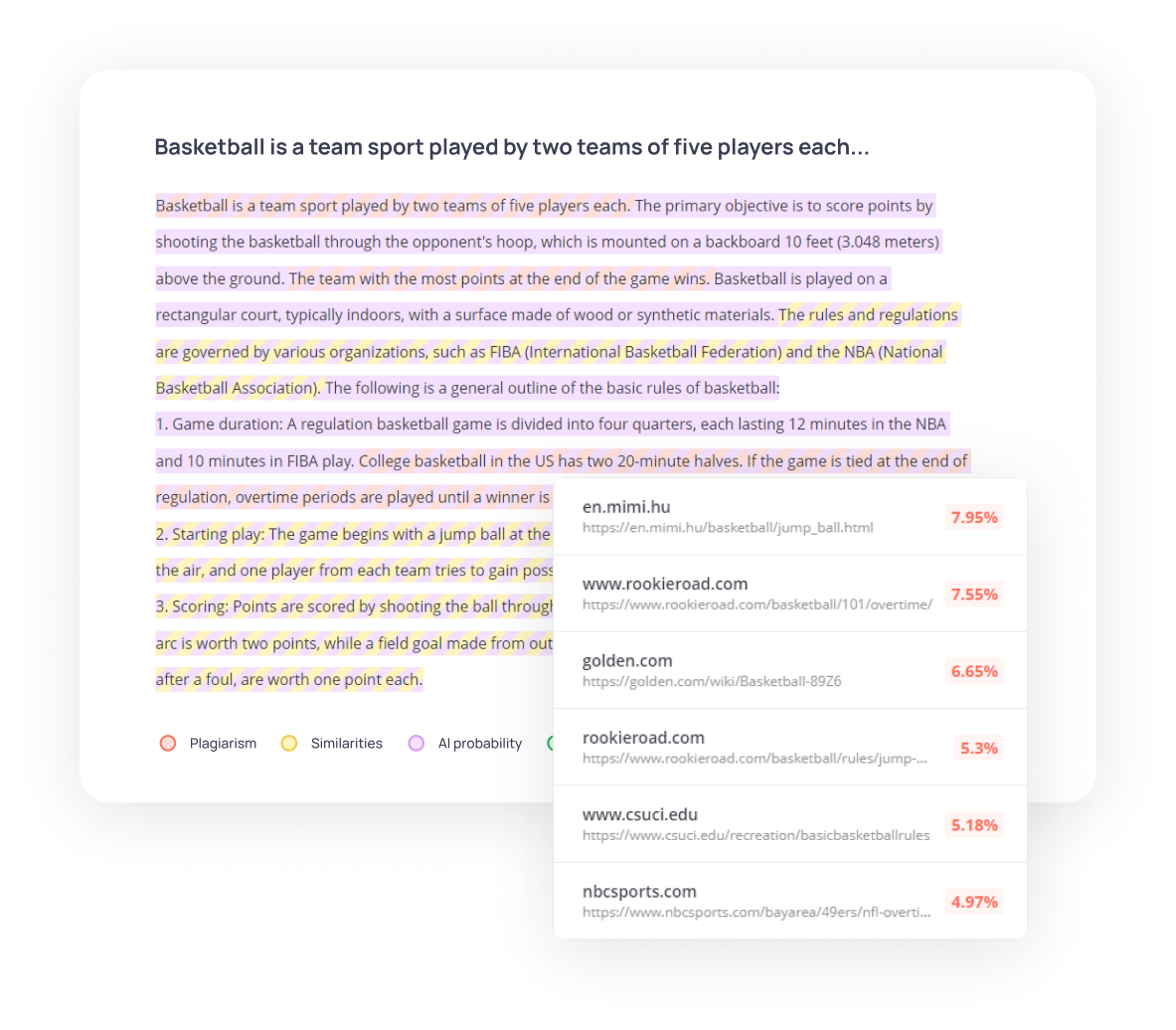
Explore Your
Similarity Report
See highlighted matches, source links, and similarity details in one report. Editors can review where overlap appears, compare sources, and decide what requires revision, clarification, or further attention.
Request a Report Demo
Source Highlights
Matched passages are highlighted with source links, helping editors review overlap faster and with better context.

Editor-Friendly Output
Clear reports make it easier to discuss revisions with authors, reviewers, or internal content teams.
What Users Say About PlagiarismSearch
Got Questions? We’ve Got Answers!
Common questions about checking manuscripts, articles, and publishing content
Can publishers check unpublished manuscripts?
Yes. Publishers can use PlagiarismSearch to check unpublished manuscripts, articles, book chapters, reports, and educational materials before release. The report helps editors identify text similarities, review source matches, and decide whether the content needs revision, clarification, or further editorial attention before publication.
Is this suitable for journals and book publishers?
Yes. PlagiarismSearch can support journal submissions, academic articles, edited volumes, book chapters, textbooks, and other publishing materials. It is especially useful when editors need a clear similarity report before peer review, production, author revision, or final publication.
Does a high similarity score always mean plagiarism?
No. A similarity score is a review signal, not a final verdict. Some matches may come from quotations, references, common terminology, standard descriptions, or properly attributed material. Editors should review the highlighted passages and source context before deciding whether a match is problematic.
Can editors use reports when working with authors?
Yes. The report can help editors explain which passages need attention, where source overlap appears, and why attribution or rewriting may be required. This makes communication with authors more specific and helps avoid vague feedback such as “the text seems copied.”
Can we check educational or adapted content?
Yes. Publishers can check textbooks, course materials, learning resources, translated content, adapted chapters, and digital publishing materials. This is useful when content has passed through multiple writers, editors, translators, or contributors before reaching the final publication stage.
Is API access available for publishing workflows?
Yes. Publishers, platforms, and editorial service providers can discuss API access if they need to connect plagiarism checks to an existing submission system, content platform, or internal workflow. This is useful for teams that process documents regularly or at higher volume.
Can we request a custom publisher plan?
Yes. If your team checks many manuscripts, works with recurring submissions, or needs API access, you can send an inquiry through the form. We’ll help you choose a suitable setup based on your document volume, average length, workflow, and publishing needs.

Ready to Strengthen Your Editorial Review?
Tell us about your publishing workflow and document-checking needs.
- 1 Plagiarism submission *
- 1 AI submission *
- Unlimited Time frame (days)
- 10 Plagiarism submissions *
- 10 AI submissions *
- Unlimited Time frame (days)
- 50 Plagiarism submissions *
- 50 AI submissions *
- Unlimited Time frame (days)
- 100 Plagiarism submissions *
- 30 Time frame (days)
- 100 Plagiarism submissions *
- 30 Time frame (days)
- 300 Plagiarism submissions *
- API Access
- Access to Storage
- 30 Time frame (days)
- 300 Plagiarism submissions *
- API Access
- Access to Storage
- 30 Time frame (days)
- 300 Plagiarism submissions *
- 300 AI submissions *
- API Access
- Access to Storage
- 30 Time frame (days)
- 300 Plagiarism submissions *
- 300 AI submissions *
- API Access
- Access to Storage
- 30 Time frame (days)
- 100 Plagiarism submissions *
- 100 AI submissions *
- 90 Time frame (days)
- 100 Plagiarism submissions *
- 100 AI submissions *
- 90 Time frame (days)
-
300 Plagiarism submissions *+25on Edulegit
-
300 AI submissions *+25on Edulegit
- API Access
- Access to Storage
- 90 Time frame (days)
-
300 Plagiarism submissions *+25on Edulegit
-
300 AI submissions *+25on Edulegit
- API Access
- Access to Storage
- 90 Time frame (days)
-
500 Plagiarism submissions *+100on Edulegit
-
500 AI submissions *+100on Edulegit
- API Access
- Access to Storage
- 90 Time frame (days)
-
500 Plagiarism submissions *+100on Edulegit
-
500 AI submissions *+100on Edulegit
- API Access
- Access to Storage
- 90 Time frame (days)
- 1 000 Plagiarism submissions *
- 365 Time frame (days)
- 1 000 Plagiarism submissions *
- 365 Time frame (days)
-
3 000 Plagiarism submissions *+25on Edulegit
- API Access
- Access to Storage
- 365 Time frame (days)
-
3 000 Plagiarism submissions *+25on Edulegit
- API Access
- Access to Storage
- 365 Time frame (days)
-
3 000 Plagiarism submissions *+100on Edulegit
-
3 000 AI submissions *+100on Edulegit
- API Access
- Access to Storage
- 365 Time frame (days)
-
3 000 Plagiarism submissions *+100on Edulegit
-
3 000 AI submissions *+100on Edulegit
- API Access
- Access to Storage
- 365 Time frame (days)